
July 5, 2026
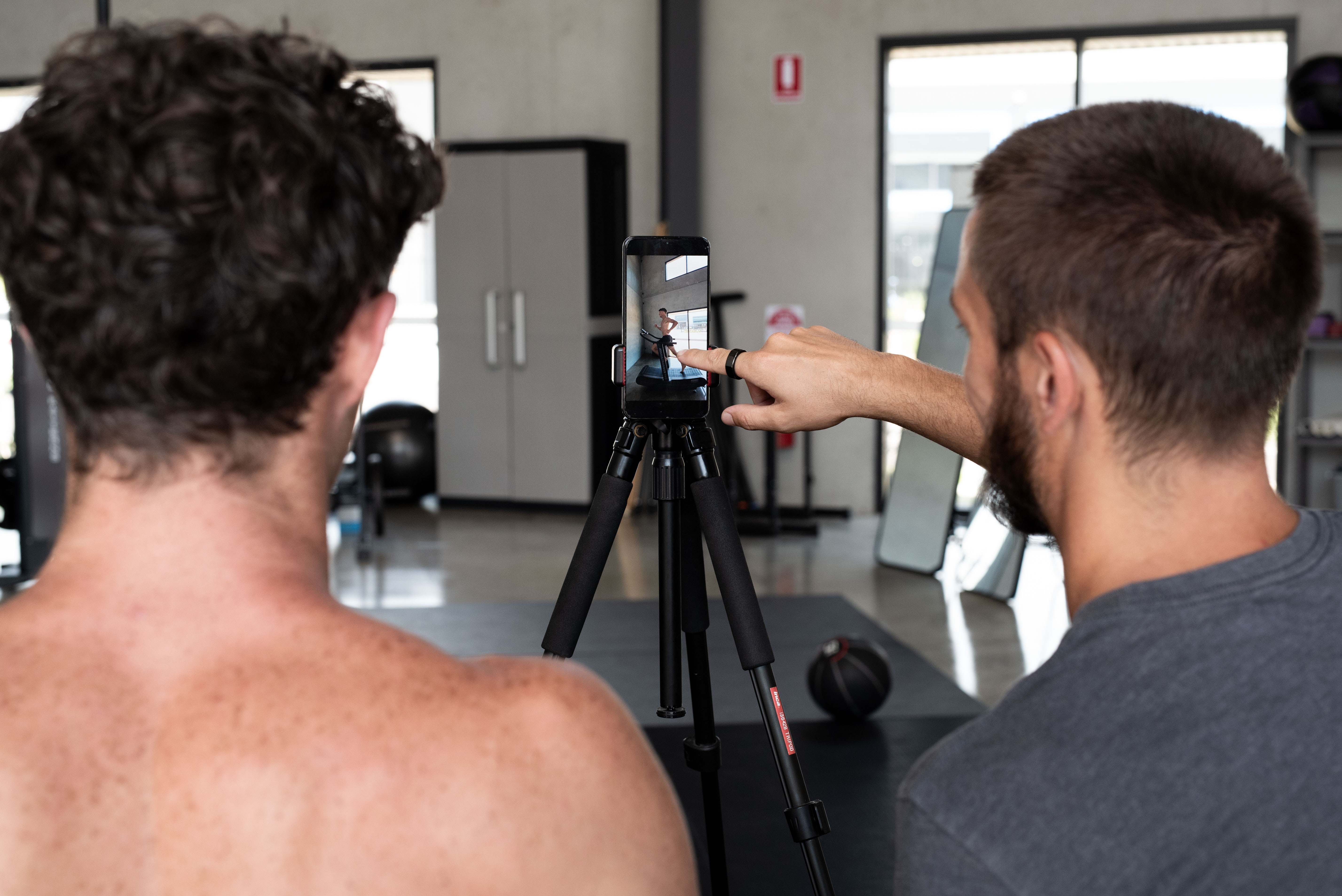
As a physiotherapist, this might sound like a strange thing for me to say.
But after working with hundreds of people dealing with persistent pain, I've noticed the same
pattern over and over again.
Many people have already seen multiple physiotherapists.
They've had hands-on treatment.
They've completed strengthening exercises.
They've stretched.
They've dry needled.
They've taped.
They've followed the rehabilitation plan.
Sometimes they even improve.
But a few weeks or months later...
The pain comes back.
So why?
Modern physiotherapy is excellent at identifying local tissue pathology.
A sore Achilles tendon.
An irritated rotator cuff.
Patellofemoral knee pain.
Lumbar disc irritation.
Hip impingement.
Tennis elbow.
Most physiotherapists are highly trained to determine which tissues are irritated and
prescribe treatments aimed at reducing pain and improving function.
That skill is incredibly valuable.
But here's the question that often isn't fully answered:
Why did that tissue become overloaded in the first place?
Pain is often the end result of a mechanical problem—not the beginning of one.
Think about a car.
If one tyre keeps wearing out faster than the others, replacing the tyre solves the immediate
problem.
But if the wheel alignment hasn't changed, the new tyre wears out exactly the same way.
The tyre wasn't defective.
It was responding to the forces being placed upon it.
Your body behaves similarly.
Muscles, tendons, ligaments and joints adapt to the loads they experience every single day.
When those loads become consistently abnormal, tissues eventually become irritated.
The tissue isn't always the cause.
It's often the victim.
One of the most common presentations we see is persistent lower back tightness.
Many people have spent years trying to release it.
Massage.
Foam rolling. (Link to MFR Blog)
Dry needling.
Stretching.
Core exercises.
Manual therapy.
Each intervention provides relief.
But only temporarily.
Why?
Because the lower back is often compensating for poor organisation elsewhere.
If the pelvis remains tipped forward while the rib cage sits elevated and the thorax struggles
to rotate efficiently during walking, the lumbar spine frequently becomes responsible for
creating stability.
The nervous system increases muscle tone there because it has no better option.
Treat the lower back all you want.
If those relationships never improve, the tension returns.
Not because the treatment failed.
Because the body is still solving the same mechanical problem.
Most rehabilitation focuses on reducing pain.
And that's important.
Pain limits movement.
Pain changes behaviour.
Pain affects quality of life.
But reducing pain doesn't automatically change the mechanics that produced it.
This is why many people find themselves in a cycle:
Pain develops.
Treatment reduces symptoms.
Life returns to normal.
The same movement patterns continue.
Pain gradually returns.
The cycle repeats.
Functional Patterns starts from a different question.
Instead of asking:
"How do we calm down this painful tissue?"
We ask:
"Why is this tissue being overloaded every single day?"
That changes everything.
Rather than isolating a painful body part, we assess how your entire body distributes force
through:
● Breathing
● Standing posture
● Walking gait
● Rib cage and pelvis relationship
● Rotation through the trunk
● Foot mechanics
● Weight transfer
Because that's how your body actually functions.
As one integrated system.
When these relationships improve, the excessive stress being placed on the painful area
often reduces naturally.
As both a physiotherapist and a Functional Patterns practitioner, I've found that the greatest
long-term improvements come from combining an understanding of pain with an
understanding of biomechanics.
It's not enough to know what's hurting.
We also need to know why it's happening.
Pain isn't always something to eliminate.
Sometimes it's information.
It's your body's way of telling you that the forces travelling through your system aren't being
managed efficiently.
Our goal isn't simply to make the pain disappear.
Our goal is to improve the mechanics that led to the pain in the first place.
When you change the inputs your body experiences every day—standing, walking, bending,
rotating and breathing—you change the loads placed on your tissues.
And when those loads change, the need for chronic compensation often changes too.
That's where long-term results begin.
If you've had treatment that helped temporarily but the pain keeps returning, it may be time
to look beyond the painful tissue itself.
At Functional Patterns Newcastle, our Initial Assessment examines how your entire body
functions as a system. We'll identify the movement compensations contributing to your pain
and build a plan that addresses the root mechanical cause—not just where the symptoms
happen to show up.

