
July 11, 2026
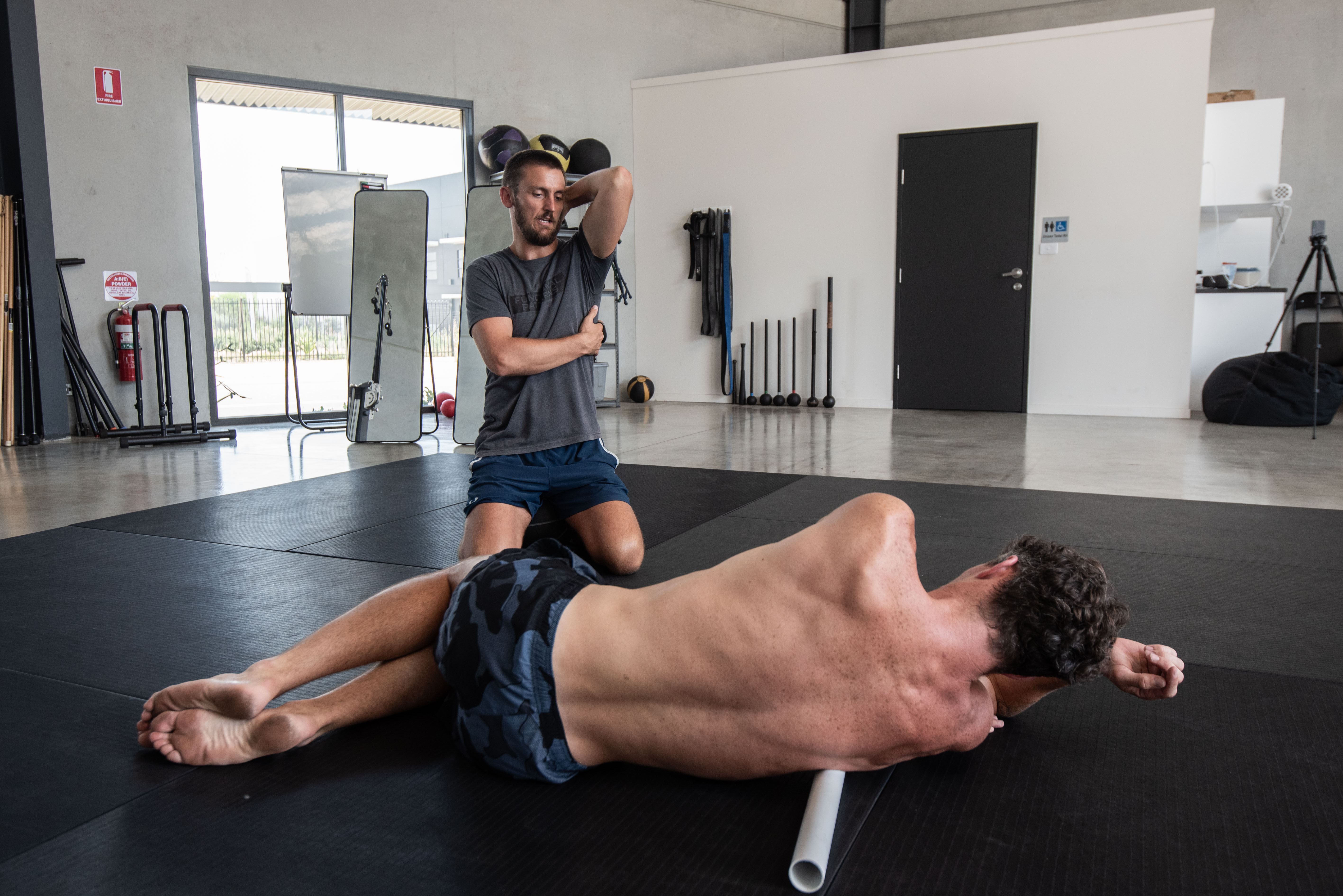
Walk into almost any gym, recovery centre or scroll through social media and you'll
see foam rollers, massage balls, percussion guns and "myofascial release" (MFR)
techniques being promoted as the solution to pain, stiffness and recovery.
Recovery is a big part of the fitness and rehab industry. From elite athletes to office
workers, people are investing more time than ever into recovering from training, work
and the physical demands of modern life.
But is myofascial release really "breaking up knots" or "releasing tight muscles"?
The answer is more nuanced than most people would believe.
There are good reasons why MFR has exploded in popularity.
Modern lifestyles involve prolonged sitting, repetitive movement patterns, high stress
levels and arbitrary exercise modalities that humans didn’t evolve for. People feel
stiff, sore and restricted, so naturally they're searching for something that provides
immediate relief.
Myofascial release often does exactly that.
Whether it's foam rolling before the gym or lying on a massage ball after work, many
people experience reduced tension, easier movement and temporary pain relief
within minutes.
The problem isn't that MFR doesn't work.
The problem is that many people misunderstand why it works.
You'll commonly hear claims that MFR:
● Releases tight muscles
● Breaks up scar tissue
● Removes adhesions
● Breaks apart muscle knots
● Lengthens fascia
These explanations sound intuitive, but the evidence supporting them is surprisingly
limited.
The amount of force you can generate with a foam roller or massage ball is nowhere
near enough to permanently remodel healthy fascia or physically "break apart" tissue
in the way it's often described.
If that were true, we'd likely cause tissue damage every time we rolled.
While MFR does have some mechanical benefits, current evidence suggests that the
benefits are primarily neurological.
Instead of physically changing the tissue itself, MFR appears to:
● Improve local circulation and fluid dynamics
● Reduce protective muscle guarding
● Improve body awareness (proprioception)
● Produce short-term improvements in range of motion
● Temporarily reduce nervous system tone
Think of it like turning the volume down on your nervous system rather than
changing the structure of your body.
Your muscles haven't suddenly become longer.
Your system is just more primed for better movement.
For this reason, MFR can be an incredibly useful tool—but only when used
appropriately.
At Functional Patterns Newcastle, we view myofascial release as exactly that:
A tool—not a solution.
Tension rarely develops randomly.
Your body creates tension for a reason.
Often it's attempting to stabilise poor mechanics elsewhere in the system.
Imagine someone who constantly experiences a tight lower back.
They spend every evening lying on a foam roller or massage ball, temporarily
relieving the discomfort.
The next morning the tightness is back.
Why?
Because the lower back wasn't the problem.
It was the compensation.
If the pelvis sits excessively forward while the rib cage remains flared, the lumbar
spine often becomes the area responsible for creating stability.
The body maintains increased tone there because it has no better option.
Until the relationship between the pelvis, rib cage and the rest of the body improves
through addressing the FP BIg 4, standing, walking, running and throwing, the
tension will remain the same.
The release wasn't wrong.
It simply wasn't followed by a solution.
Used strategically, MFR can be extremely valuable.
Before Movement
Reducing unnecessary muscle tone before introducing better movement patterns
can make it easier for the body to adapt and sustain the new inputs.
You're essentially creating a window of opportunity where the nervous system is
more receptive to change.
As a Recovery Tool
After a physically demanding day or intense training session, MFR can help shift the
body toward a more relaxed state.
Many people find it useful in the evening to help reduce overall nervous system
arousal before sleep.
To Improve Body Awareness
Sometimes people can't control a body part simply because they can't feel it well.
Targeted myofascial release can increase sensory awareness, making it easier to
access muscles and positions that previously felt disconnected.
Problems arise when MFR becomes the only strategy.
If you're rolling the same calf, hip flexor, neck or lower back every day for
months—or years—you should ask yourself an important question:
Why does it keep getting tight?
If nothing changes after the release, your body is simply returning to the same
mechanical solution.
The body is doing exactly what it's designed to do.
It recreates the tension because the underlying movement problem still exists.
In these situations, MFR becomes less of a rehabilitation strategy and more of a
temporary pain-management routine.
It feels good.
But it doesn't create lasting change.
This is where many rehabilitation and recovery programs fall short.
The release is only the first step.
The next—and arguably most important—step is integration.
Integration means teaching your body how to move as an interconnected system.
The way we do this is respecting how the human body evolved to move - by
prioritising standing, walking, running and throwing.
Rather than allowing old movement habits to return, you reinforce more efficient
biomechanics through intentional movement.
At Functional Patterns Newcastle, we often use myofascial release before movement
sessions—not because we expect it to permanently solve the issue, but because it
creates a better environment for making new connections.
The goal isn't simply to feel looser.
The goal is to earn the right to keep those improvements by improving the way your
body organises itself during standing, walking, running and everyday movement.
Myofascial release deserves its place in modern recovery.
It can reduce muscle tone, improve body awareness, increase short-term mobility
and help regulate the nervous system.
But it shouldn't become a substitute for improving how you move.
If the mechanics that created the tension remain unchanged, the tension will almost
always return.
Use release as an initial starting point.
Then use movement to create lasting change.
That's where long-term resilience is built.

